



物理/工程

调查分析火星上三种不同的水资源提取方法
基于树莓派的宠物喂食器研发及宠物情绪分析
高中:哈尔滨市第九中学校国际部
高中:广东广雅中学
高中:上海协和双语高级中学(古北校区)
| 分类 | 学生 | 学校 | 课题 | 成果形式 |
|---|---|---|---|---|
| 地质 | 蔡璟妍 | ULC剑桥国际高中 | 短期内最有效地促进土壤中和的石灰材料的研究
An investigation into the most effective liming material to facilitate soil neutralization in short term. |
学术论文 |
| 工程 | 聂子源 | 东北育才学校 | 关于空间太阳能可实现性的讨论
A Discussion into the Achievability of Space Based Solar Power |
学术论文 |
| 化学 | 王李丹 | 领科教育上海校区 | 有关影响降解生物降解塑料因素及有关微生物的调查评估.
An investigation and evaluation of the factors that affect the degradation of biodegradable plastics and bioplastics by microbes. |
学术论文 |
| 化学 | 张若暄 | 武外英中学校 | 研究物体表面口香糖残留物的影响因素并研制一款有效喷雾
An investigation into the factors affecting the mass of gum residue and
the development of the effective spray |
试剂制作 |
| 农业 | 万名恺 | 赣州市文清外国语学校 | 如何在中国西北沙漠土壤种植土豆?
How to grow potatoes in North West China? |
实验报告 |
| 生物 | 张季阳 | 上海赫德双语学校 | 如何构建一种质谱分析方法来检测血清中的睾丸素?
How can a mass spectrometry method be established to determine the concentration of
testosterone in serum? |
学术论文 |
| 生物 | 李暄 | 美伦国际学校 | 重金属污染物在阿尔兹海默症中的作用
The role of heavy metal pollutants in Alzheimer's disease |
学术论文 |
| 食品 | 杜禹辰 | 北京十一学校 | 奶茶中不同种类的糖是否会对青少年产生影响?
Whether or not bubble teas with different kinds of sugars have different effects on teenagers |
学术论文 |
| 物理 | 王珉道 | 广东广雅中学 | 弧线球和非弧线球运动的力学原理及在足球场上的实际应用
The mechanics principle and practical application of curveball and non-curveball movement in football field |
学术论文 |
| 物理 | 齐岳 | 哈尔滨市第九中学校国际部 | 如果没有超新星,我们的宇宙会是什么样子?
What would our universe be like without supernovae? |
学术论文 |
| 医学 | 陈盛 | 海亮外国语学校国际学院 | 煮开的蒜水中,抗生素成分对于咽喉炎的作用
Effect of antibiotic properties of boiled garlic water on treating pharyngitis |
学术论文 |
| 医学 | 孙苋博 | 大庆一中剑桥国际中心 | 中英两国的无痛胃内窥镜检查和无痛分娩有何不同?
What do painless GI Endoscopy and labour differ between China and UK? |
学术论文 |
更多物理/工程优秀选题
| 姓名 | 选题 | 成绩 | 姓名 | 选题 | 成绩 |
| 傅同学 | 评估篮球运动鞋鞋底缓冲材料和结构的最佳缓冲性能组合 | A* | 王同学 | 重新设计电热毯: 增强安全性和用户体验的研发计划 | A* |
| 高同学 | 电磁感应与谐振耦合:手机及其他智能家居设备无线充电技术的对比分析与应用研究 | A* | 冯同学 | 高压电线产生的电磁场会在多大程度上影响某些类型的泛在无线通信方法? | A* |
| 方同学 | 如何使用微型计算机来控制甘薯种植灌溉系统的水流? | A* | 王同学 | 骨传导耳机、入耳式耳机和耳机哪个更好? | A* |
| 朱同学 | 评价无人机在救灾中的应用并提出改进建议 | A* | 吕同学 | 如何通过气动和自动控制程序的结合,提高加湿器的效率,证明单房间的空气自动循环 | A* |
| 常同学 | 主动空气动力学对f1赛车的影响及其潜在应用分析 | A* | 李同学 | 最小半导体的物理极限是多少?如何挑战传统规范并评估其必要性? | A* |
| 王同学 | 基于 Voronoi 图和人工鱼群算法的网络基站布局优化探索--以海口市为例 | A* | 赵同学 | 如何根据不倒翁的原理,为年轻人制作不易翻倒的水杯? | A* |
| 倪同学 | 当发生车祸时,我们如何在赛车上使用技术来提高生存率? | A* | 刘同学 | 全新电吉他设计:通过琴颈、琴品和琴身重新设计,符合人体工程学,增强了演奏性和舒适度 | A* |
| 赵同学 | 飞盘 “升降效应 ”轨迹分析及最佳投掷方式建议 | A* | 王同学 | 基于热电效应的小型露营电源及露营市场研究 | A* |
数学

如何运用Voronoi模型提高学校AED和急救箱投放效率——以杭州云谷学校为例

如何运用数学建模来提升足球队的表现?
高中:苏州科技城外国语学校
高中:北京市第八十中学
高中:天津惠灵顿学校
更多数学优秀选题
| 姓名 | 选题 | 成绩 | 姓名 | 选题 | 成绩 |
| 张同学 | 兔生殖模型与斐波那契数列的相容性研究 | A* | 旷同学 | 基于回归分析构建衡量中国高中留学生在校幸福感水平的模型 | A* |
| 韩同学 | 评估和优化 IRT 模型在教育评估中的应用 | A* | 侯同学 | 如何找到一个公式来列举特定类型的有机化合物及其近似值 | A* |
| 谷同学 | 研究口碑对应用分发效用的扩散模型 | A* | 黄同学 | 从有限到无限:从柯西不等式和分部求和开始 | A* |
| 方同学 | 探索洛必达法则的简化推导及其在教学中的应用 | A | 李同学 | 素数检测在提升密码安全性中的应用价值评估 | A |
| 徐同学 | 如何建立一个针对中国足球投注的盈利模型数学模型? | A* | 冯同学 | 数学如何帮助我们选择电影? | A* |
| 庞同学 | 寻找解决魔方的最佳方法 | A | 刘同学 | 能否利用博弈论来更好地理解网络错误信息问题? | A |
| 陈同学 | 数学和统计如何帮助学生选择A-level课程? | A* | 李同学 | 对“日本麻将”的调查以及概率法则如何提高获胜率。 | A* |
| 周同学 | 基于数学原理开发复数的新表达形式,并将其应用于各种场景的比较 | A | 王同学 | 如何利用数学模型有效提高小麦产量? | A |
化学/材料

延长自制鲜榨果汁保质期的条件是什么?
What are the Effective Conditions to Extend the Shelf-lives ofHomemade Fresh Squeezed Fruit Juices?
延长自制鲜榨果汁保质期的条件是什么?
研究概述:
本项目的主要目的是检测几种典型的自制鲜榨果汁的保质期,以及一些实际有效的延长保质期的方法。研究者在家进行鲜榨果汁实验,榨汁后每2小时取样并每小时观察果汁的腐败情况。鲜榨橙汁、桃汁、西瓜汁和甜瓜汁的保质期分别为10-12小时、10-12小时、0-2小时和6-8小时,西瓜汁保鲜时间最短。研究证实腐败会伴随果汁PH值的降低,加入柠檬汁能够有效提高鲜榨果汁保鲜。
作者Author: 武心悦 Xinyue Wu
1. Introduction
Generally, people consider fresh-squeezed fruit juices as easily spoiled, but cannot recognize their shelf-life. There aren’t expiration dates printed on fruit juices and people have to “bet” when the juice spoils. Meanwhile, shelf-lives are different for the variable recipes of juicing and juice makers don’t have references for their exclusive juice, which increases the pathogenetic risk.
So, the purpose of this project is to detect the shelf-lives of common homemade freshsqueezed fruit juices of four classical juiced fruits and practical ways to preserve them.
2. Method
2.1 Theory
The appearance of the bacterial colony illustrates spoilage of samples (Gao, et al., 2021). To determine spoilage, thermotank is used to speed up the reproduction of microorganisms. The dividing of the bottom layer as bacteria colonies represents spoilage.
2.2 Standard
All the methods of juicing refer to the book I Love Making Juices!, have standards below.
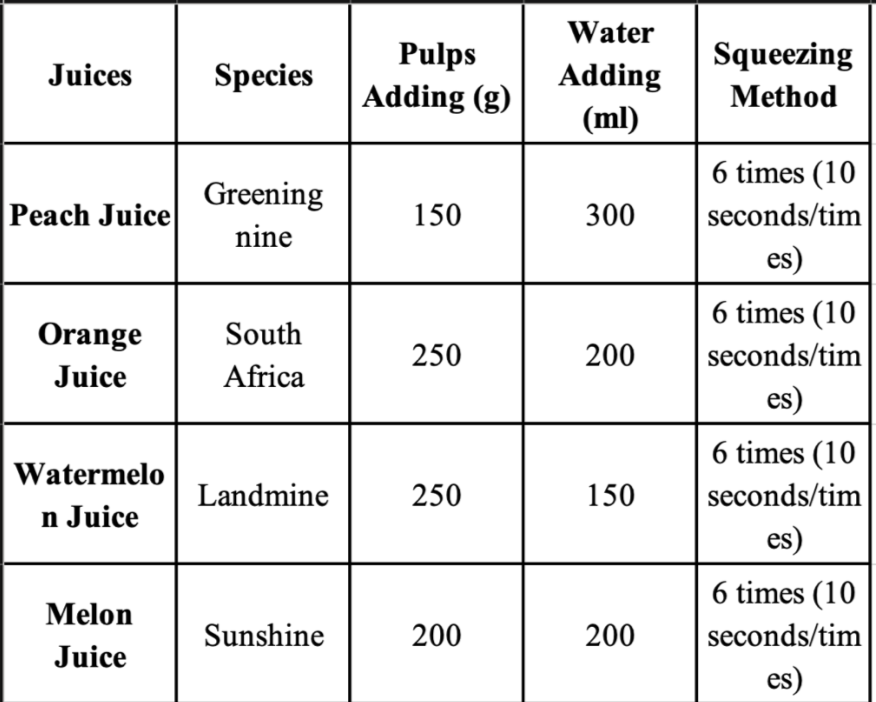
Table 2.1. Standards of juices
Shelf-life is the time from squeezing the juice to its spoiling time (Gao, X. et al. 2021). The location of experiments with room temperature and refrigerator temperature conditions is 301.15K (28.7℃) and 290K (17.5℃) respectively.
2.3 Equipment
Peritoneal dialysis fluid heating thermotank (Yuyao Zhangting Nuomin Plastic Factory), Zhuheng Electronic Balance (Shanghai Ranhao Electronics Co., Ltd.), Xiaomi Mijia Bluetooth Thermometer 2, Pen type acidity meter (Changzhou Edkors Instrumentation Co., Ltd.), MY JUICER™ juicer.
2.4 Experiments
2.4.1 Shelf-lives of four fruit juices with room temperature and no additive
Peach Juice
23 hours after squeezing, peach juice samples appeared to spoilage in the ample with a shelf-life of 12 hours, but unspoiled in a 10-hour sample. 28 hours after squeezing, participation still emerges in the 12-hour sample but is unspoiled in the 10-hour sample. Oxide red flocculent precipitation in 2-hour, 4-hour, 6-hour, 12-hour and 14-hour samples.
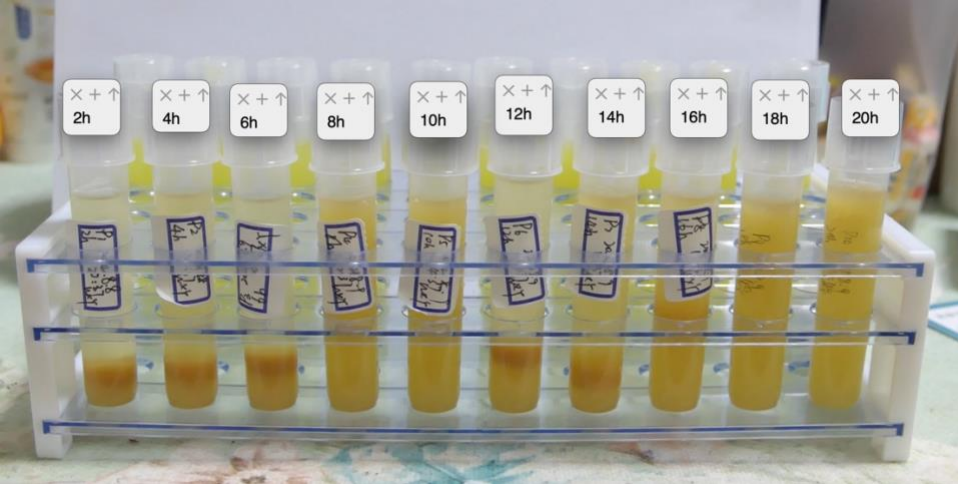
Diagram 2.1. peach juice samples 28 hours after squeeze
Orange Juice with Room Temperature and no Additive
26 hours after squeezed, orange juice samples appeared to spoilage in all the samples after the 12-hour sample, but it was unspoiled in the 10-hour sample. Olive yellow flocculent precipitation in 12-hour, 14-hour, 16-hour, 18-hour and 20 hour-samples.
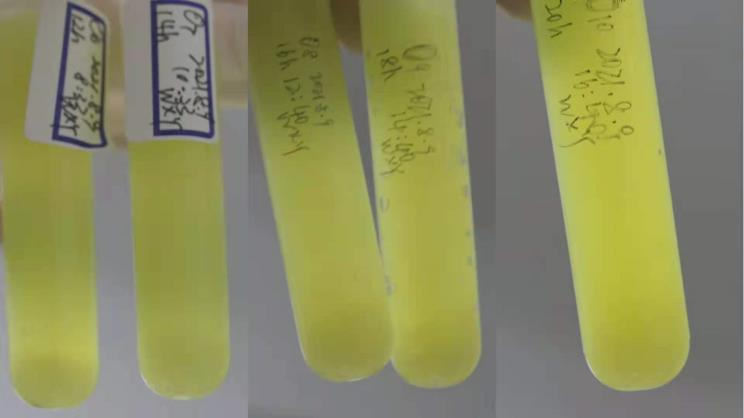
Diagram 2.2. orange juice samples 26 hours after squeeze
Watermelon Juice with Room Temperature and no Additive
All samples appeared prescription after 3 hours in the thermotank. Samples from 2-hour to 16-hour all have carmine-red flocculent prescriptions.
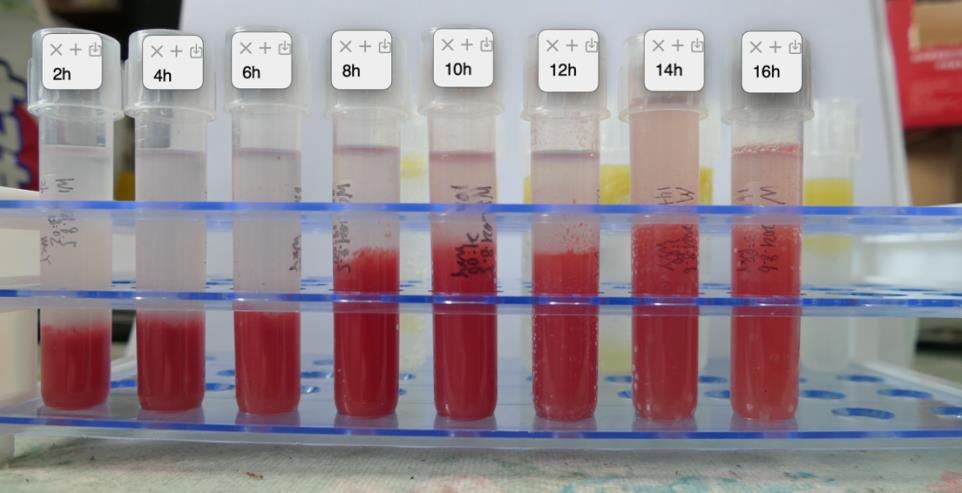
Diagram 2.3. watermelon juice samples 25 hours after squeeze
Melon Juice with Room Temperature and no Additive
13 hours after squeeze, melon juice samples appeared to spoilage in the 8-hour sample, but unspoiled in the 6-hour sample. After three later observations, the phenomenon maintained the same. Blonde flocculent precipitation in 8-hour and 14-hour samples.
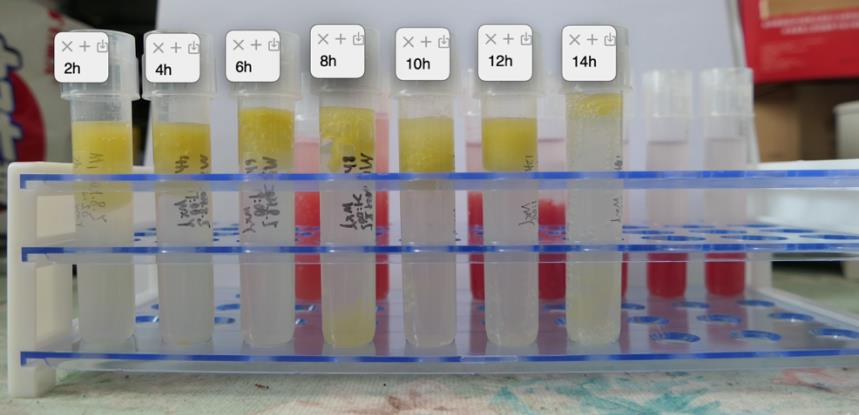
Diagram 2.4. melon juice samples 22 hours after squeeze
Melon Juice with Refrigerator Temperature and no Additive
30 hours after squeeze, melon juice appeared to spoilage in all the samples after 26 hours, but unspoiled in the 22-hour sample. After three later observations, the phenomenon maintained the same. Pineapple flocculent precipitation in 8-hour and 26-hour samples.
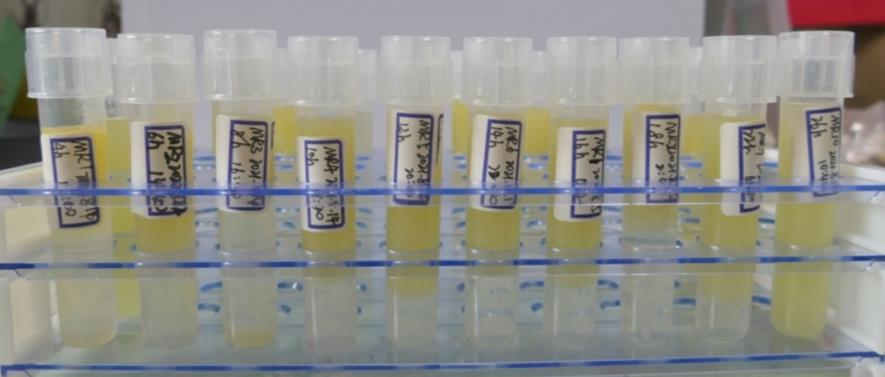
Diagram 2.5. melon juice samples under 30 hours
Also, the pH value of melon juice has a significant decline at 26 hours and 33 hours after squeeze.
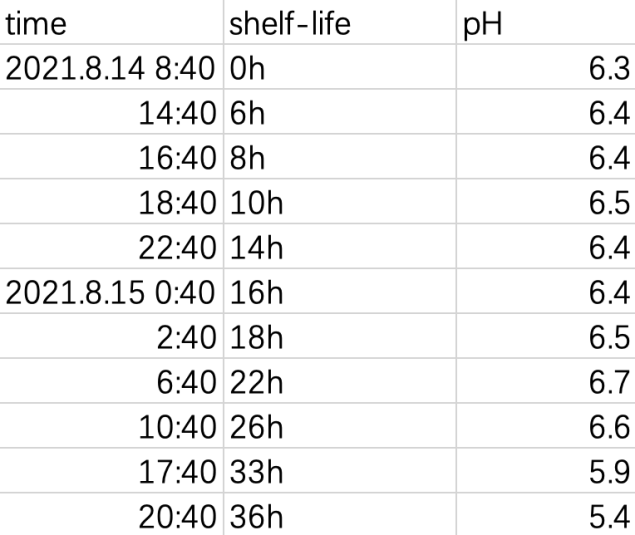
Table 2.2. pH value of melon juice with refrigerator temperature and no additive
2.5.3 Melon Juice with Room Temperature and 25g Sodium Citrate
According to GB 2760-2014 National Food Safety Standard, Standard for the Use of Food Additives, adding sodium citrate has no legal limitation. Favourer should not be influenced by adding sodium citrate, so it was added every 5g until the pH of melon juice changed. After adding 25g sodium citrate, the pH increased from 6.3 to 6.4. 22 hours after squeezed, melon juice samples to appeared spoilage in all the samples after 16 hours, but they spoiled in the 14-hour sample. After three later observations, the phenomenon maintained the same.
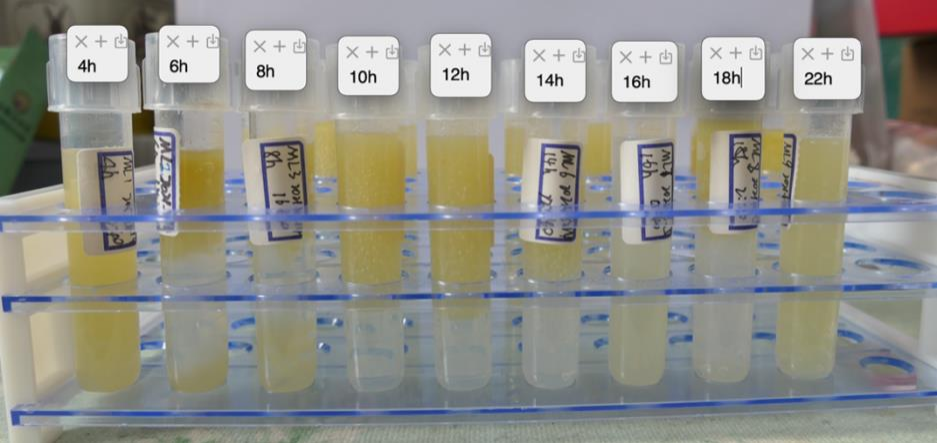

Diagrams 2.6 & 7. melon juice samples 26 hours after squeeze
Pineapple flocculent precipitation in 6-hour, 8-hour, 16-hour and 22-hour samples. The pH value of melon juice has a significant decline between 10 hours and 14 hours after squeeze.
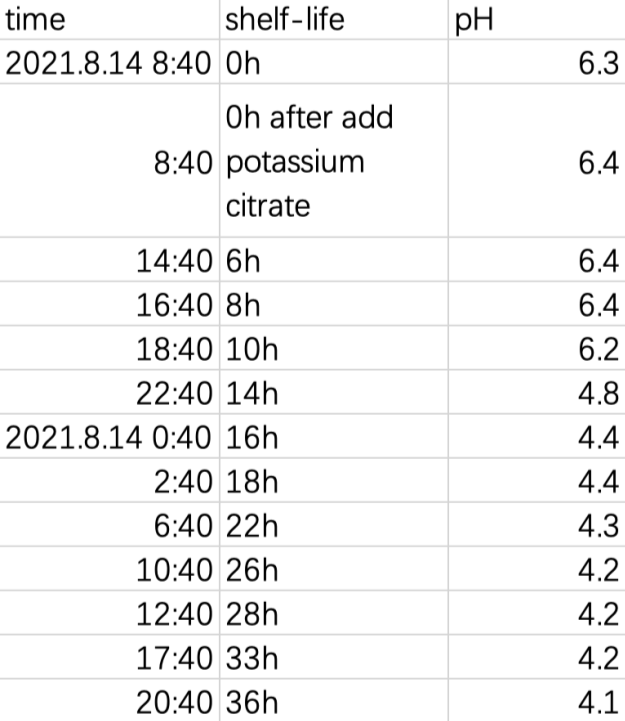
Table 2.3. pH value of melon juice at room temperature and sodium citrate
Findings
- The shelf-life of no additive and under room temperature fresh-squeezed peach juice and orange juice is 10-12 hours, watermelon juice is 0-2 hours, and watermelon juice is 6-8 hours.
- The shelf-life of no additive and under refrigerator temperature fresh-squeezed melon juice is 22-26 hours.
- The shelf-life of under room temperature fresh-squeezed melon juice with 25g sodium citrate is 14-16 hours.
- Refrigerator temperature can extend the shelf-life of freshly squeezed juice for about 16 hours.
- Adding appropriate lemon juice is useful too, it could extend 8 hours of shelf-life of melon juice. Spoilage accompanies a decrease in pH value
4. Conclusion
The main purpose of this project is to detect the shelf-lives of a few typical homemade fresh-squeezed juices and some practically efficient ways to extend them. After testing by squeezing common homemade juices, sampling them each 2 hours after juicing and observing which first appears to spoilage each 1 hour after juicing, the shelf-lives of freshsqueezed orange, peach, watermelon and melon juices are 10-12, 10-12, 0-2 and 6-8 hours respectively.
Besides, the effective and practical conditions for homemade juices to extend their shelflives are adding an appropriate quantity of lemon juice after juicing and preserving them in the refrigerator. For melon juice, preserving in the refrigerator can extend its shelf-life to 22-26 hours and adding appropriate lemon juice (sodium citrate) can extend it to 14-16 hours. Thus, as suggestions for making homemade fresh-squeezed fruit juices, adding a few drops of lemonade and lowering the temperature can extend shelf-lives of juices.
References
2.Kang, jy., Lee, sn. (2012). 我爱做饮料! (I Love Making Juices!). 2012.7, Beijing: Beijing Science and Technology Publishing.
3.Liu, Y., Wang, X. (2018). ‘Analysis of Detection Results of Microbial Contamination in Handmade Beverages and Fresh Squeezed Juice’. Food and Fermentation Sciences & Technology, 54(4), pp. 97-101.
4.Russell, N., Gould, G. Food Preservatives. 2013., : Springer Science & Business Media.
5.Sun, H., Luo. B., Shi, J., and Yin, Fang. (2005). ‘Effects of potassium citrate on seed germination and growth of wheat seedlings’. Journal of Changshu Institute of Technology, 19(2), pp. 77-80.
6.Yan, H., and Sun, H. (1994). ‘Causes of Fruit Juice Spoilage and Fruit Juice Storage Technology’. LUOYE GUOSHU, (), pp. 85-86. doi: 10.1385/j.cnki.lygs.194.s1.084.
7.Zhu, J., Zhao, X., Wang, D., Dong, W., and Sun, X. (2021). ‘Storage Quality Changes and Shelf Life Predictive Modeling of Blueberry Juice Treated by Ultra-high Pressure and Thermal Sterilization’. Science and Technology of Food Industry, (), pp. - . doi: 10.13386/j.issn1002-0306.2021020161.
8.Zhu, Y., Wang, Z., Wang, W., Ji, L., Zhang, J., Bai, T., Zhao, Z., Hou, B., and Chen, L.(2021). ‘Research Progres on Antibacterial Mechanism of Natural Food Preservatives’. China Condiment, 46(9), pp. 176-180. doi: 10.3969/i.ssn.1000-9973.2021.09.034

添加填料如何影响树脂防锈漆的性能?
高中:中山市华辰实验中学
高中:领科教育北京校区
高中:深大师院国际高中(南山校区)
更多化学/材料优秀选题
| 姓名 | 选题 | 成绩 | 姓名 | 选题 | 成绩 |
| 惠同学 | 细菌荧光素酶报告系统的反应条件优化及温度对荧光持续时间的影响研究 | A* | 唐同学 | 咖啡中的芳香化合物如何影响人体? | A* |
| 陆同学 | 不同环境对乒乓球胶皮性能影响的研究 | A* | 赵同学 | 复合菌丝体材料是否具有作为建筑材料可持续创新的潜力? | A* |
| 許同学 | 一项关于环糊精的调查以及它是否对咖啡有积极影响 | A* | 陈同学 | 研究胶片图片的显影剂成分如何影响其特性和质量。 | A* |
| 赵同学 | 不同发酵程度对茶多酚(儿茶素)含量影响的比较 | A* | 马同学 | 与生物提取法相比,使用全合成法生产 Taxol 有哪些优缺点? | A* |
| 李同学 | 通过实验研究和软件模拟,对几种常用材料的保温性能进行了比较分析 | A* | 王同学 | 研究了不同淬火介质对提高45钢和65 Mn弹簧钢硬度的影响 | A* |
| 郭同学 | 应用银和石墨烯制作手机触摸屏面板的可行性 | A* | 刘同学 | 调查香料固定剂如何影响香水留香时间 | A* |
| 张同学 | 研究和比较 3D假肢接受腔材料,确定最适合宠物狗的材料 | A* | 付同学 | 在染色过程中影响偶氮砜活性染料皂色牢度的因素有哪些? | A* |
| 吕同学 | 草酸铁光催化萃取废催化剂中贵金属铂在什么条件下最有效? | A* | 周同学 | 寻找去除银杏籽臭味的方法 | A* |
生物/医学

阿尔茨海默病与肠道微生物关系的研究,包括阿尔茨海默病的预防措施
An investigation into the connection between Alzheimer’s disease and gut microbes including prevention measures for Alzheimer’s disease
阿尔茨海默病与肠道微生物关系的研究,包括阿尔茨海默病的预防措施
研究概述:
本论文通过整合以往文献中的信息,研究肠道微生物如何通过神经系统影响阿尔茨海默症的发生。文中介绍了阿尔兹海默症的集中预防措施,包括饮食控制、益生菌治疗和环境卫生改变。通过文献综述,研究指出地中海饮食有助于维持肠道的稳态,益生菌能够改变阿尔茨海默症患者的肠道通透性。卫生学假说认为,充分接触微生物具有积极影响。尽管已经有许多实验支持了上述假设,但仍需要更多证据指导临床应用。
作者Author:沈珉熹 Minxi Shen
0Abstract
This dissertation mainly focuses on how gut microbes affect the occurrence of the Alzheimer’s disease through nervous systems by integrating the information from former literature. It also introduces several precautionary measures for Alzheimer’s disease, which include diet control, probiotics treatment, and sanitation change. At present, though many experiments have been conducted, showing support to this hypothesis, more theoretical evidence is still needed for confirmation of the hypothesis.
1Introduction
Alzheimer’s disease is one of the most common irreversible, progressive neurodegenerative disorder and the most common cause of dementia in the elderly, accounting for approximately 60%-80% of dementia cases [1]. While the pathological hallmarks of Alzheimer’s disease are well described, the underlying pathogenesis of the disease remains controversial [2]. The new hypothesis that gut microbes may be correlated to Alzheimer’s disease attracts me. I explored this topic mainly by doing secondary research including analyzing literature and studies. My objective was to integrate information to investigate the linkage between them.
2Gut microbes and Alzheimer’s disease
2.1Composition, metabolism, and functions of gut microbes
There are various species of gut bacteria in human body. Dysbiosis of the flora is associated with many metabolic diseases and ill-health state like diabetes, obesity, cardiovascular diseases, and inflammatory bowel diseases [3].
The function of gut microbiome is extensive. They produce neurotransmitters or neuromodulators (choline, tryptophan) and hormones in the gut [3]. Beyond metabolism, gut microbiome also plays a role in modulating immune system development by promoting formation of gut-associated lymphoid tissues, maintaining the intestinal epithelial barrier, and conditioning cells in the immune system [4]. While a healthy microbiome protects ourselves, microbial imbalance may predispose the organism to illness [4].
2.2Pathways for gut microbes to affect brain and Alzheimer’s disease
The central nervous system is a crucial ‘bridge’ for the mutual communications of gut microbes and the brain. The TLRs in host cells contribute to the production of cytokine which is key to their communications. And the dysfunction of gut microbiota may change the regulation of inflammatory response and cause extra effects on human’s brain and behaviors through central nervous system.
Another two ways are known as the autonomic nervous system and the enteric nervous system. They collaborate with central nervous system, promoting changes on brain and affecting the incidence of neurodegenerative diseases including Alzheimer’s disease by producing TLRs.
2.3Potential pathogenesis in Alzheimer’s disease
Lipopolysaccharides is the main components of the outer cell wall of gram-negative bacteria. Qiao et al. demonstrated that long-term administration of the bacterial endotoxin lipopolysaccharides markedly accelerated deposition of amyloid-β [5]. Their study well illustrates the correlation between lipopolysaccharides and amyloid-β, indicating that the excretion of gut microbes lipopolysaccharides is associated with Alzheimer’s disease as deposition of amyloid-β acts as an early stage and a main character of developing Alzheimer’s disease. Therefore, with the increasing permeability of the blood-brain barrier, it becomes easier for bacteria and their metabolites to penetrate the brain.
In addition to lipopolysaccharides, a significant quantity of functional amyloid can be generated by many bacterial strains, including Mycobacterium tuberculosis, and may contribute to the pathology of Alzheimer’s disease through the accumulation of proteinaceous misfolded amyloid-β oligomers and fibrils [6]. The precursor of amyloid gA, the main structural subunit of the bacterial amyloids, has a similar structure to Aβ42. The structure can be recognized by the TLR2 receptors in human body, triggering the production of pro-inflammatory cytokines. Consequently, neuroinflammation and neurodegeneration are triggered and contribute to the development of Alzheimer’s disease.
3Preventions
The Mediterranean diet features high consumption of olive oil, vegetables, legumes, grains, fruits and nuts, moderate consumption of fish and poultry, low consumption of full fat dairy products and red meat, and low-to-moderate consumption of wine [7]. Vegetables, fruits, and nuts are the most important sources of fiber and compounds against the oxidative process [8]. Olive oil, which acts as the major source of fat intake, offers high oleic acid content and polyphenols that have atherogenic antioxidant and anti-inflammatory effects [8].
Recent studies have shown that probiotics strains reduce oxidative stress and stimulate antioxidant enzymes in the brain [9]. After being provided with Lactobacilli and Bifidobacteria- based probiotics, the Mini-Mental State Examination scores of Alzheimer’s disease patients greatly improved [9]. Based on that and other similar experiments, probiotic intervention suggested a new therapeutic approach.
The hygiene hypothesis for Alzheimer’s disease suggests that the incidence of Alzheimer’s disease may be negatively associated with the abundance of microbes, which means that as the abundance decreases, the incidence of Alzheimer’s disease increases [10]. Dysfunction of the immune system caused by insufficient exposure to microorganisms through negative effects on T cells system may lead to the increase in the risk of Alzheimer’s disease [10].
4Discussion
To assess the correlation between the gut microbes and Alzheimer’s disease and prevention methods, I analyzed literature and the statistics in previous studies and did two interviews with experts to explore the mechanism and different hypotheses. However, the three precautionary methods are mostly based on experiments, so deeper research at more theoretical level is necessary to support its validity.
To defeat Alzheimer’s disease, several new drugs that can clear β-amyloid plaques or prevent tau phosphorylation were developed based on the amyloid cascade hypothesis, which centers on a cascade event of damages in neurons caused by the amyloid precursor protein [11]. However, these drugs have been proven to be almost completely invalid according to the results of clinical trials [12-15].
Therefore, due to the limited data regarding the variations in the microbial composition of those patients, future work must analyze the structural differences of the gut microbial content between Alzheimer’s disease patients and healthy individuals to provide insight into the mechanisms by which alteration influences Alzheimer’s disease and potential therapeutic targets. Large-scale analysis is warranted in the future to confirm the exact pathogenesis.
5Conclusion
This paper describes the functional characteristics of gut microbes associated with Alzheimer’s disease. Gut microbes, their metabolites, and other factors including aging, together contribute to the imbalance of gut microbes’ composition, leading to inflammatory responses that exacerbate Alzheimer’s disease pathology via different pathways. Mediterranean diet helps maintain the homeostasis in intestine. Probiotics are able to alter the intestinal permeability in patients with Alzheimer’s. Hygiene hypothesis suggests that adequate exposure to microorganisms has positive impacts. All the three methods are able to control the incidence of Alzheimer’s disease.
6Bibliography
2.Du, X., Wang, X., & Geng, M. (2018). Alzheimer's disease hypothesis and related therapies. Translational neurodegeneration, 7, p.2.
3.Kesika, P., Suganthy, N., Sivamaruthi, B.S. and Chaiyasut, C. (2020). Role of gut-brain axis, gut microbial composition, and probiotic intervention in Alzheimer’s disease. Life Sciences, p.118627.
4.Sun, M., Ma, K., Wen, J., Wang, G., Zhang, C., Li, Q., Bao, X. and Wang, H. (2020). A Review of the Brain-Gut-Microbiome Axis and the Potential Role of Microbiota in Alzheimer’s Disease. Journal of Alzheimer’s Disease, 73(3), pp.849–865.
5.Qiao, X., Cummins, D.J. and Paul, S.M. (2001). Neuroinflammation-induced acceleration of amyloid deposition in the APPV717Ftransgenic mouse. European Journal of Neuroscience, 14(3), pp.474–482.
6.Jiang, C., Li, G., Huang, P., Liu, Z., & Zhao, B. (2017). The Gut Microbiota and Alzheimer's Disease. Journal of Alzheimer's disease : JAD, 58(1), pp.1–15.
7.Georgoulis, M., Kontogianni, M. and Yiannakouris, N. (2014). Mediterranean Diet and Diabetes: Prevention and Treatment. Nutrients, 6(4), pp.1406–1423.
8.Del Chierico, F., Vernocchi, P., Dallapiccola, B. and Putignani, L. (2014). Mediterranean Diet and Health: Food Effects on Gut Microbiota and Disease Control. International Journal of Molecular Sciences, 15(7), pp.11678–11699.
9.Kowalski, K., & Mulak, A. (2019). Brain-Gut-Microbiota Axis in Alzheimer's Disease. Journal of neurogastroenterology and motility, 25(1), pp.48–60.
10.Hu, X., Wang, T., & Jin, F. (2016). Alzheimer's disease and gut microbiota. Science China. Life sciences, 59(10), pp.1006–1023.
11.Honig, L.S., Vellas, B., Woodward, M., Boada, M., Bullock, R., Borrie, M., Hager, K., Andreasen, N., Scarpini, E., Liu-Seifert, H., Case, M., Dean, R.A., Hake, A., Sundell, K., Poole Hoffmann, V., Carlson, C., Khanna, R., Mintun, M., DeMattos, R. and Selzler, K.J. (2018). Trial of Solanezumab for Mild Dementia Due to Alzheimer’s Disease. New England Journal of Medicine, [online] 378(4), pp.321–330. Available at: https://www.nejm.org/doi/10.1056/ NEJMoa1705971.
12.Egan, M. F., Kost, J., Tariot, P. N., Aisen, P. S., Cummings, J. L., Vellas, B., Sur, C., Mukai, Y., Voss, T., Furtek, C., Mahoney, E., Harper Mozley, L., Vandenberghe, R., Mo, Y., & Michelson,
D. (2018). Randomized Trial of Verubecestat for Mild-to-Moderate Alzheimer's Disease. The New England journal of medicine, 378(18), pp.1691–1703.
13.Egan, M. F., Kost, J., Tariot, P. N., Aisen, P. S., Cummings, J. L., Vellas, B., Sur, C., Mukai, Y., Voss, T., Furtek, C., Mahoney, E., Harper Mozley, L., Vandenberghe, R., Mo, Y., & Michelson,
D. (2018). Randomized Trial of Verubecestat for Mild-to-Moderate Alzheimer's Disease. The New England journal of medicine, 378(18), pp.1408-1420.
14.Gauthier, S., Feldman, H.H., Schneider, L.S., Wilcock, G.K., Frisoni, G.B., Hardlund, J.H., Moebius, H.J., Bentham, P., Kook, K.A., Wischik, D.J., Schelter, B.O., Davis, C.S., Staff, R.T., Bracoud, L., Shamsi, K., Storey, J.M.D., Harrington, C.R. and Wischik, C.M. (2016). Efficacy and safety of tau-aggregation inhibitor therapy in patients with mild or moderate Alzheimer’s disease: a randomised, controlled, double-blind, parallel-arm, phase 3 trial. The Lancet, 388(10062), pp.2873–2884.
15.Ricciarelli, R. and Fedele, E. (2017). The Amyloid Cascade Hypothesis in Alzheimer’s Disease: It’s Time to Change Our Mind. Current Neuropharmacology, 15(6).
“冬病夏治”三伏贴治疗儿童过敏性鼻炎的荟萃分析
高中:赣州市文清外国语学校
高中:广州市斐特思学校
高中:大连市英领国际学校
更多生物/医学优秀选题
| 姓名 | 选题 | 成绩 | 姓名 | 选题 | 成绩 |
| 方同学 | 分析纳米颗粒在细菌性角膜炎治疗中的效果 | A* | 肖同学 | 交通事故导致对PTSD治疗的评估 | A* |
| 蒋同学 | 新型小分子大米蛋白肽对慢性肾病患者低蛋白血症的改善作用研究 | A* | 余同学 | 从人内源性逆转录病毒K研究中开发的靶向药物能否取代传统化疗治疗结直肠肿瘤? | A* |
| 姜同学 | 乳制品与中老年人睡眠的作用:对助眠奶粉的成分和产品属性的分析 | A* | 任同学 | 孕妇焦虑对胎儿心脏影响的研究 | A* |
| 雷同学 | 如何帮助哮喘患者安全度过围手术期? | A* | 庞同学 | 眼眶周围色素沉着:病因和有效治疗的综合综述。 | A* |
| 王同学 | 基于心理、生物和社会文化视角,青少年饮食失调的预防和治疗最有效策略是什么? | A* | 钱同学 | 肺腺癌和肺鳞状细胞癌之间差异基因表达差异的综合生物信息学分析。 | A* |
| 梁同学 | 乙醇分解最佳醋酸杆菌菌株的研究:三株醋酸杆菌的比较分析 | A* | 叶同学 | 评估最有效的催眠药及其减轻副作用的相关方法 | A* |
| 林同学 | 确定薄荷油能否改善青少年的反应时间并降低其精神疲劳程度 | A* | 颜同学 | 慢性癌痛长期管理中阿片类药物的疗效及优化策略研究 | A* |
| 彭同学 | 昼夜节律紊乱如何影响免疫系统功能和学习效率 | A* | 仝同学 | 急诊外科抗凝治疗心血管疾病患者围手术期风险评估与止血技术的比较分析 | A* |
计算机

设计一个名为CodeNoob的网站,引领 A-Level 学生的新一代计算机科学教育》

用一个模型展示利用物联网的基于预订的智能停车场
高中:晋中市博雅培文实验学校
高中:苏州科技城外国语学校
高中:北京市新英才学校剑桥国际中心
更多计算机优秀选题
| 姓名 | 选题 | 成绩 | 姓名 | 选题 | 成绩 |
| 郭同学 | 提升单核CPU计算速度的方法研究 | A* | 凌同学 | 人工智能在中小企业中的应用: 关于实际应用、伦理考虑和算法选择的研究 | A* |
| 吴同学 | 对互联电缆的分析以评估最合适的电缆 | A* | 吴同学 | 在Windows上创建一个待办事项列表应用程序,提供虚拟奖励来激励用户 | A* |
| 熊同学 | 构建神经网络评估仿生方法在视觉验证中的影响 | A* | 韩同学 | 探索人工智能绘画中的自然语言处理,通过优化提示词提高生成图像的准确性。 | A* |
| 陆同学 | 基于 CNN 的传统书法识别模型的设计与实现 | A* | 章同学 | 设计并开发了一种具有高效散热性能和高稳定性的软件路由器 | A* |
| 吴同学 | 以哈尔滨为例,自动驾驶汽车是否以及何时能够成为东北地区的主流? | A* | 赵同学 | 陪伴机器人是否应该模仿和识别人类的外表和情感? | A* |
| 夏同学 | 基于数据治理的智慧教育学区管理系统设计 | A* | 钱同学 | 云存储在多大程度上能够取代当前数字设备个人用户的本地存储? | A* |
| 胡同学 | 不同协议对基于 Arduino 开发平台的微控制器的通信性能有何影响? | A* | 戴同学 | 是否存在对未成年用户保护的问题,算法如何改善未成年保护系统? | A* |
| 金同学 | 人工智能应用于青少年心理健康监测系统的可行性 | A* | 范同学 | 如何设计并建立吉他学习网站,为吉他初学者提供免费资源和科学的专业学习路线 | A* |
商科/财经/金融
为我的Mis饮用瓶装水公司设计一个商业计划书

分析2020年以来金融危机对中国的影响,并评估银行系统可以采取哪些方法来预防这一现象
高中:杭州东方中学
高中:上海光华学院剑桥国际中心(光华剑桥)
高中:镇海中学剑桥A-Level中心
| 分类 | 学生 | 学校 | 课题 | 成果形式 |
|---|---|---|---|---|
| 地质 | 蔡璟妍 | ULC剑桥国际高中 | 短期内最有效地促进土壤中和的石灰材料的研究
An investigation into the most effective liming material to facilitate soil neutralization in short term. |
学术论文 |
| 工程 | 聂子源 | 东北育才学校 | 关于空间太阳能可实现性的讨论
A Discussion into the Achievability of Space Based Solar Power |
学术论文 |
| 化学 | 王李丹 | 领科教育上海校区 | 有关影响降解生物降解塑料因素及有关微生物的调查评估.
An investigation and evaluation of the factors that affect the degradation of biodegradable plastics and bioplastics by microbes. |
学术论文 |
| 化学 | 张若暄 | 武外英中学校 | 研究物体表面口香糖残留物的影响因素并研制一款有效喷雾
An investigation into the factors affecting the mass of gum residue and
the development of the effective spray |
试剂制作 |
| 农业 | 万名恺 | 赣州市文清外国语学校 | 如何在中国西北沙漠土壤种植土豆?
How to grow potatoes in North West China? |
实验报告 |
| 生物 | 张季阳 | 上海赫德双语学校 | 如何构建一种质谱分析方法来检测血清中的睾丸素?
How can a mass spectrometry method be established to determine the concentration of
testosterone in serum? |
学术论文 |
| 生物 | 李暄 | 美伦国际学校 | 重金属污染物在阿尔兹海默症中的作用
The role of heavy metal pollutants in Alzheimer's disease |
学术论文 |
| 食品 | 杜禹辰 | 北京十一学校 | 奶茶中不同种类的糖是否会对青少年产生影响?
Whether or not bubble teas with different kinds of sugars have different effects on teenagers |
学术论文 |
| 物理 | 王珉道 | 广东广雅中学 | 弧线球和非弧线球运动的力学原理及在足球场上的实际应用
The mechanics principle and practical application of curveball and non-curveball movement in football field |
学术论文 |
| 物理 | 齐岳 | 哈尔滨市第九中学校国际部 | 如果没有超新星,我们的宇宙会是什么样子?
What would our universe be like without supernovae? |
学术论文 |
| 医学 | 陈盛 | 海亮外国语学校国际学院 | 煮开的蒜水中,抗生素成分对于咽喉炎的作用
Effect of antibiotic properties of boiled garlic water on treating pharyngitis |
学术论文 |
| 医学 | 孙苋博 | 大庆一中剑桥国际中心 | 中英两国的无痛胃内窥镜检查和无痛分娩有何不同?
What do painless GI Endoscopy and labour differ between China and UK? |
学术论文 |
更多商科/财经/金融优秀选题
| 姓名 | 选题 | 成绩 | 姓名 | 选题 | 成绩 |
| 高同学 | 以香港和南京为例分析影响地铁票价的因素及票价波动的影响 | A* | 贾同学 | 智能机器人在酒店中的应用能在多大程度上替代人类员工? | A* |
| 潘同学 | 分析了中国彩色隐形眼镜行业的发展,并预测了未来的发展趋势 | A* | 刘同学 | 区块链技术在供应链管理中的应用:现状、挑战与未来趋势 | A* |
| 唐同学 | 中国个人投资者心理特征对交易决策的影响:分析与启示 | A* | 顾同学 | 为上海流浪狗和流浪猫救助中心制定商业计划 | A* |
| 万同学 | 分析网络空间流量经济乱象形成的原因及可能的解决方案 | A* | 朴同学 | 以北京和天津为例:从区域经济协调发展的角度看,中央政府是应该促进还是限制地方政府之间的博弈 | A* |
| 陈同学 | 女性意识的觉醒在多大程度上影响了中国的健身行业--《Lululemon》的成功案例研究 | A* | 万同学 | 分析三种社交媒体广告:开屏广告、品牌视频和付费网红博主测评广告对消费者态度的影响——以化妆品为例 | A* |
| 邓同学 | 迪士尼乐园VS北京环球影城:哪家公司的中国本地化营销策略更有效? | A* | 陶同学 | 哪种算法模型更适合预测股票价格的未来走势?——趋势跟随模型与多因子模型的比较研究 | A* |
| 陈同学 | 分析音乐剧在中国的发展现状,影响其发展的因素,以及如何促进其在中国的发展 | A* | 陈同学 | 对中国 K-POP 粉丝消费化心理动机的分析 | A* |
| 郝同学 | 以杭州为例,分析我国养老旅居产业的现状、前景和问题,并提出发展建议 | A* | 蒋同学 | 线上营销在多大程度上适合中国体验式书店的发展? | A* |
心理学

冥想是如何影响记忆的?

在理解性别差异和先入为主方面,影响 3-6 岁儿童认知发展的幼儿园环境决定因素是什么?
高中:北京市新英才学校剑桥国际中心
高中:BANZ全球化校区(嘉定)
高中:深圳外国语学校盐田高中部
更多心理学优秀选题
| 姓名 | 选题 | 成绩 | 姓名 | 选题 | 成绩 |
| 兰同学 | 中国家庭对精神疾病的接受程度与躯体化症状之间的关系 | A* | 关同学 | 探讨国内高中生人际交往能力(自我表露、共情能力、亲社会行为)与学业成绩的关系。 | A* |
| 常同学 | 一项关于短视频使用频率与外貌信息回避行为的研究:外貌焦虑的中介作用和自我效能感的调节作用——以TikTok为例 | A* | 王同学 | 同一首钢琴曲对不同年龄段和不同性别的人有什么不同的影响? | A* |
| 胡同学 | 服装如何影响人们的第一印象? | A* | 徐同学 | 儿童目睹家庭暴力后的不同应对策略、行为和情绪的元综合 | A* |
| 吕同学 | 评估压力对不同年龄人群睡眠质量的影响 | A* | 罗同学 | 微信对高中生社交焦虑和人际关系的影响有多大? | A* |
| 关同学 | 父母教养方式与青少年人格特征的形成有关系吗?以中国高中生为例 | A* | 靳同学 | 在中国,人们的爱情语言如何影响其恋爱关系的满意度? | A* |
| 王同学 | 为什么美妆产品直播能够引起女性的冲动消费? | A* | 陶同学 | “情绪智力训练”热潮:中国00后情绪智力、主观幸福感和社交焦虑分析 | A* |
| 翁同学 | 关于z世代音乐粉丝群体的幸福感分析 | A* | 司徒同学 | 青少年的个性是否增加了做噩梦的可能性? | A* |
| 陈同学 | 基于相关分析探讨中国高中生学习焦虑的原因及解决焦虑的方法 | A* | 杨同学 | 不同的图像呈现时间和消极性对错误记忆形成的影响 | A* |
可展示作品(Artefact)
ASDAN EPQ 艺术文学类选题涵盖服装设计、工业设计、视觉设计、纪录片制作、动画设计、戏剧、音乐等
Making Transparent Fibreglass Reinforced Plastic (FRP) Pressure Vessel for Desalination Applications
How best create a video to express the benefits and issues of life in Chengdu from different social perspectives?
Create a business plan for a stray dogs and cats rescue centre in Shanghai
创作者:李若谷




【点击图片放大查看】




【点击图片放大查看】




创作者:黄语童
人物专访:点击查看人物专访

【点击图片放大查看】